
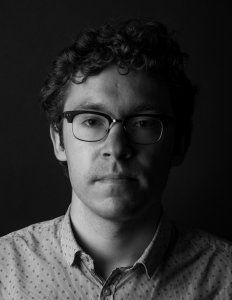
My dissertation draws on trauma studies, contemporary philosophy of history and narrative theory to consider how time is experienced in post-Soviet Latvian fiction. I am particularly inspired by such concepts as melancholia (Dominick LaCapra), multitemporal present (Marek Tamm and Laurent Olivier), presence (Eelco Runia) and sublime historical experience (Frank Ankersmit). These philosophical concepts illuminate the non-linear nature of time after the decline of modern time regime which was driven by the idea of progress. As if arguing against this obsession with the future, post-Soviet fiction in Latvia and elsewhere is more concerned with the sudden and haunting return of traumatic past events. I contend that this phenomenon can be best understood by analyzing how philosophical concepts of time resonate with certain narrative structures and strategies. Ultimately, I address also the ethical questions behind the non-linear organization of time, showing how melancholia, especially in post-Soviet context, can function as a valuable reaction to the past.
Publications from the project
- “The Screaming Thing: A Material Ecocritical Exploration of Trauma in Aleksandrs Pelēcis’s Poems,” Respectus Philologicus 45,50 (2024): 71-83, https://doi.org/10.15388/RESPECTUS.2024.45(50).6.
- “Progress, Trauma and Narrative Possibilities in Nora Ikstena’s Soviet Milk,” Slavonica 28,2 (2023): 99-111, https://doi.org/10.1080/13617427.2024.2342605.
- “Tagadnes mirāža: vēsture un melanholija,” in Tagadnības skārums: veltījumkrājums profesorei Mārai Rubenei, ed. Igors Gubenko. Rīga: LU FSI [forthcoming in 2023]. (in Latvian)
- “Metonymy, Presence, and the Ethics of Imagination in Postmemorial Writing: Andra Manfelde’s Zemnīcas bērni and Katja Petrowskaja’s Maybe Esther,” Interdisciplinary Literary Studies 25,1 (2023): 124–141, https://muse.jhu.edu/pub/2/article/882365.
- “Secondary Witnessing and Narrative Erasure in Inga Gaile’s The Beautiful Ones,” Colloquia 50 (2022): 13-28, https://doi.org/10.51554/Coll.22.50.02.
- “Metarefleksivitāte un modernisms Montas Kromas dzejā,” in Monta Kroma: dzeja un refleksija, ed. Artis Ostups, Jānis Ozoliņš and Kārlis Vērdiņš. Rīga: LU LFMI, 2022, 180–198. (in Latvian)