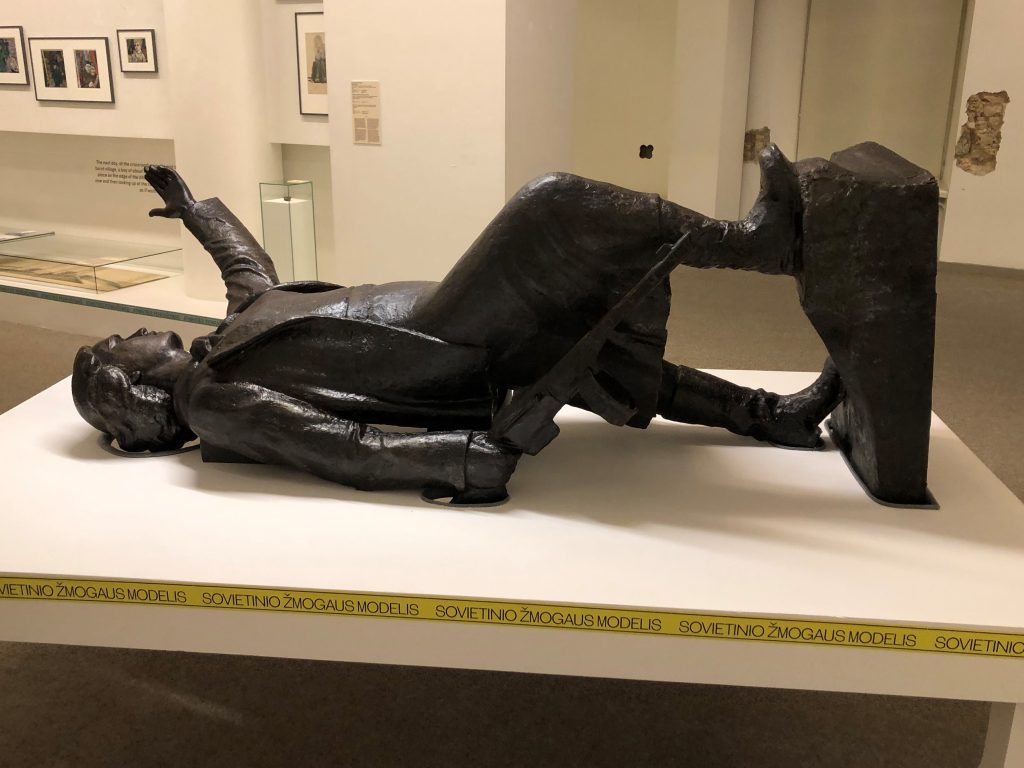
The project examines the ongoing process of change in memory culture and its manifestations in Lithuanian museums. The focus of the project are narrative representations of the Soviet past and their actualizations in light of Russia’s war against Ukraine. Soviet memory culture in Lithuania appears to be in motion; this momentum of re-consideration and change is manifested for instance by interventions in public space, such as the renewed wave of dismantling of statues, removing of plaques or changing names of public institutions.
What is noteworthy is the tendency to refer to Russia’s war against Ukraine as the central argument to stress why the respective historical remnant and its handling needs to be re-considered. A parallel dynamic can be observed in the museum space, where there are similar calls for a shift in memory practices, referring, again, to the geopolitical events of the present.
The research project examines how this process of re-consideration and change is unfolding in the museum sphere; its epistemic interest are therefore the narratives of the Soviet past that result out of this actualization process. To approach this interest through the analysis of the empirical data collected during fieldwork, the research questions are: Which narratives constitute the representation of the Soviet past in the Lithuanian museum sphere? Where do narratives align and where do they oppose each other? The methodology comprises of exhibition analysis and semi-structured interviews with museum staff.